Great drink ads do more than show a bottle or can. They create an instant visual reaction: cold, refreshing, energetic, delicious, premium, or irresistible.
That is why the best drink ads often use dramatic splashes, floating ice, fresh ingredients, bold lighting, unusual perspectives, and carefully controlled compositions. The goal is not simply to make a beverage look attractive. It is to make viewers imagine the taste, temperature, texture, and experience of the drink.
AI image generation makes this process much faster. Instead of organizing an expensive photoshoot for every concept, you can explore multiple drink ad designs by describing the product, composition, lighting, ingredients, and visual effects in a prompt.
In this guide, you'll learn how to create high-impact drink ads with AI, how to build effective drink ad prompts, how to use visual tension, and how to refine your concepts with LinoCut.
What Makes Drink Ads Eye-Catching?
The strongest drink ads usually have one thing in common: a clear visual hierarchy.
When someone sees an advertisement, their eyes should quickly understand:
What is the product?
What does it taste or feel like?
What makes it different?
What should they remember?
A successful drink ad typically combines a strong hero product with a few supporting elements rather than filling the entire frame with random objects.
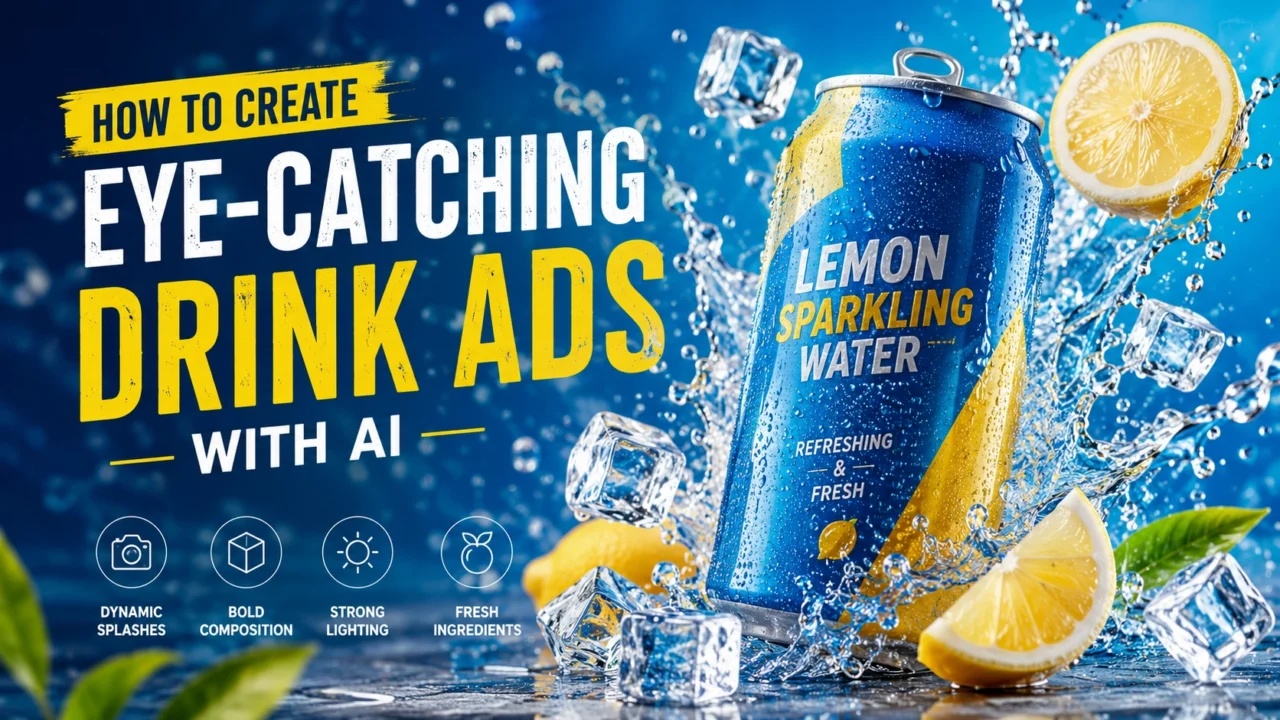
For example, a refreshing lemon soda might use:
A chilled can as the hero
Transparent ice cubes
Fresh lemon slices
A sparkling liquid splash
Bright blue and yellow colors
Strong backlighting
Negative space for advertising copy
Each element reinforces the same message: cold, fresh, sparkling, and refreshing.
This is much more effective than simply asking an AI image generator for a “beautiful beverage advertisement.”
How to Create Drink Ads With Strong Visual Tension
Visual tension is one of the most useful techniques for creating memorable drink ads.
It comes from contrast, movement, unexpected positioning, or an image that feels like it has been captured at the perfect moment.
For beverage advertising, visual tension can come from:
Exploding liquid
Flying ice
Suspended fruit
Dramatic camera angles
Diagonal compositions
Strong light and shadow
Extreme close-ups
Contrasting colors
Oversized ingredients
Imagine a sports drink can surrounded by a huge wave of water. The viewer immediately understands that the drink is energetic, refreshing, and active.
Use Motion to Make Drink Ads More Dynamic
Static product photography can look clean, but movement can make drink ads feel much more exciting.
Useful motion elements include:
Water splashes
Soda bubbles
Pouring liquid
Flying fruit
Floating ice
Liquid arcs
Vapor
Mist
Falling ingredients
A useful prompt might be:
A chilled lemon sparkling water can as the hero product, surrounded by a dramatic sparkling water splash, transparent ice cubes and fresh lemon slices frozen in mid-air, realistic condensation, dynamic diagonal composition, bright backlighting, high-speed commercial beverage photography.
The phrase “frozen in mid-air” helps communicate a high-speed photography aesthetic.
Use Diagonal Composition in Drink Ad Design
If a drink ad feels flat, introduce diagonal movement.
Instead of placing everything horizontally, create a visual line that moves through the image.
For example:
Premium energy drink can positioned slightly diagonally, powerful water splash moving from the lower-left toward the upper-right, floating ice fragments following the movement, dramatic perspective, high-contrast lighting, cinematic beverage advertising.
The diagonal splash creates a sense of speed and energy while naturally directing attention toward the product.
How to Use Composition in Drink Ads
A strong composition determines whether your drink ads look professional or chaotic.
The product should usually be the strongest visual element, while ingredients, splashes, lighting, and background details support it.
Use the Z-Pattern for Drink Ads
The Z-pattern works especially well for advertising posters that contain a headline and CTA.
A typical structure can be:
Brand → Headline → Product → CTA
You can create this visual path using:
Product placement
Diagonal splashes
Ingredient positioning
Typography
Light direction
For example, position the headline in the upper-left, let a diagonal splash move through the center, place the beverage in the lower-right, and reserve a small area for the CTA.
Use Negative Space for Drink Ad Copy
Not every part of a drink ad needs to be filled.
Negative space can make the product more prominent while providing room for headlines, slogans, or promotional information.
Try adding:
Clean negative space on the left side for advertising headline and CTA.
For example:
Premium strawberry sparkling water can positioned on the right third of the frame, surrounded by sparkling water and fresh strawberries, soft pink gradient background, dramatic liquid splash, realistic condensation, clean negative space on the left for advertising copy, premium commercial beverage photography.
This is particularly useful when creating drink ads for social media, websites, and promotional campaigns.
How to Use Color Psychology in Drink Ads
Color helps viewers understand the personality of a beverage before they read the copy.
Blue Drink Ads
Blue works well for:
Sparkling water
Sports drinks
Energy drinks
Summer beverages
It can communicate freshness, coolness, and energy.
Red Drink Ads
Red works well for:
Cola
Berry drinks
Energy beverages
Bold flavor campaigns
It creates a stronger sense of excitement and intensity.
Yellow and Orange Drink Ads
These colors are useful for:
Lemon drinks
Orange juice
Mango beverages
Tropical products
They can make drink ads feel warm, fresh, energetic, and fruity.
Black and Gold Drink Ads
Black and gold are useful for:
Premium cocktails
Luxury beverages
High-end product launches
They create a sophisticated editorial feeling.
The key is to establish one dominant color and use supporting colors rather than making every element compete for attention.
How to Make Drinks Look Cold in AI Drink Ads
For many beverage campaigns, the most important visual message is temperature.
A viewer should immediately feel that the drink is cold.
The easiest way to communicate this in drink ads is through physical details:
Condensation
Frost
Ice cubes
Water droplets
Cold mist
Chilled glass
Cool highlights
Drink Ad Prompt for a Refreshing Beverage
Ice-cold lemon soda can covered with realistic condensation droplets, transparent ice cubes surrounding the product, subtle cold mist, fresh lemon slices, sparkling bubbles, bright cool lighting, clean cyan background, refreshing summer drink ad, ultra-realistic commercial photography.
Words such as “condensation,” “ice-cold,” “cold mist,” and “water droplets” make the beverage feel more tactile.
The viewer shouldn't just see the drink. They should almost feel the cold surface of the can.
How to Create Drink Ads With Ingredients
Ingredients can instantly communicate flavor.
A strawberry drink becomes more recognizable when surrounded by strawberries. A lemon soda becomes more appetizing when fresh lemon slices appear beside the can.
However, ingredients should support the hero product.
Ingredient Explosion Drink Ads
The ingredient explosion is one of the most effective styles for fruit-based drink ads.
For example:
Premium mango juice bottle in the center, surrounded by an explosive splash of golden mango juice, fresh mango slices flying through the air, tropical leaves and frozen droplets, warm sunlight, vivid yellow-orange color palette, dynamic composition, high-speed commercial photography.
This technique works particularly well for:
Fruit juice
Smoothies
Flavored sparkling water
Milk drinks
Tea
Cocktails
The ingredients communicate flavor while the movement creates excitement.
Drink Ad Prompts for Different Beverage Styles
Different beverages need different visual languages. Instead of using one generic prompt for every campaign, adapt your drink ad prompts to the product.
Soda Drink Ad Prompt
Chilled cola bottle surrounded by an explosive wave of sparkling cola, transparent ice cubes suspended in mid-air, thousands of tiny carbonated bubbles, realistic condensation, dramatic liquid arcs, deep red background, cinematic backlighting, high-speed commercial photography, premium drink ad.
Why it works: The combination of carbonation, ice, condensation, and liquid movement immediately communicates coldness and refreshment.
Energy Drink Ad Prompt
Futuristic energy drink can emerging from an explosive blue water splash, flying ice fragments, energetic liquid droplets, powerful diagonal composition, dramatic blue and purple rim lighting, dark cinematic background, strong perspective, high contrast, premium sports drink ad.
Why it works: Strong diagonals, contrast, and motion create an energetic personality.
Juice Drink Ad Prompt
Fresh orange juice bottle surrounded by a dramatic orange juice splash, sliced oranges flying through the air, visible citrus pulp, golden liquid droplets, realistic condensation, warm sunlight, vibrant orange background, fresh commercial beverage photography, eye-catching drink ad.
Why it works: Fruit texture and juice movement reinforce the flavor.
Luxury Cocktail Drink Ad Prompt
Elegant premium cocktail in a crystal glass, deep amber liquid, large transparent ice cube, subtle condensation, delicate orange peel, black reflective surface, sophisticated golden rim lighting, dramatic shadows, minimal composition, luxury editorial drink ad.
Why it works: Minimalism, reflections, and controlled lighting communicate premium positioning.
How to Create Drink Ads With AI Using LinoCut
Once you have your creative direction, you can turn your concept into AI-generated advertising visuals with LinoCut AI.
The key is not to rely on a single generic prompt. Build the image progressively.
Step 1: Define the Product for Your Drink Ad
Start with:
Beverage type
Packaging
Flavor
Brand personality
Target audience
Main colors
For example:
Premium lemon sparkling water in a slim aluminum can, youthful and refreshing brand personality, cyan and yellow color palette.
Step 2: Add the Main Visual Effect
Decide what creates the visual tension:
Dramatic sparkling water splash with floating lemon slices and transparent ice cubes.
Step 3: Define the Composition
Tell the AI where everything should appear:
Product positioned slightly right of center, diagonal splash moving from lower-left to upper-right, negative space on the left for headline.
Step 4: Add Lighting and Photography
For a commercial drink ad, try:
Bright backlighting, crisp rim light, sparkling highlights on water droplets, high-speed commercial beverage photography.
Step 5: Generate Multiple Drink Ad Variations
Don't stop with the first image.
Experiment with:
Camera angle
Product size
Splash direction
Background color
Lighting
Ingredient placement
Product position
Small changes can completely change the visual impact of your drink ads.
How to Improve AI-Generated Drink Ads
The first generation may contain the right concept but still need refinement.
Common problems include:
The product is too small
The background is too busy
Ingredients distract from the product
The lighting is flat
There isn't enough negative space
The liquid effect looks unnatural
Instead of rebuilding the entire image, use AI editing to make targeted changes.
Try instructions such as:
Make the beverage can 20% larger while preserving the existing splash composition.
Or:
Remove the extra fruit in the background and create more negative space for advertising text.
Or:
Increase the realistic condensation on the bottle while keeping the lighting and product position unchanged.
This iterative approach can turn an interesting concept into a polished drink ad design.
A Reusable Formula for Drink Ad Prompts
A reliable drink ad prompt can follow this structure:
Product + Product Position + Dynamic Effect + Ingredients + Temperature Details + Lighting + Background + Composition + Camera Style + Advertising Style
For example:
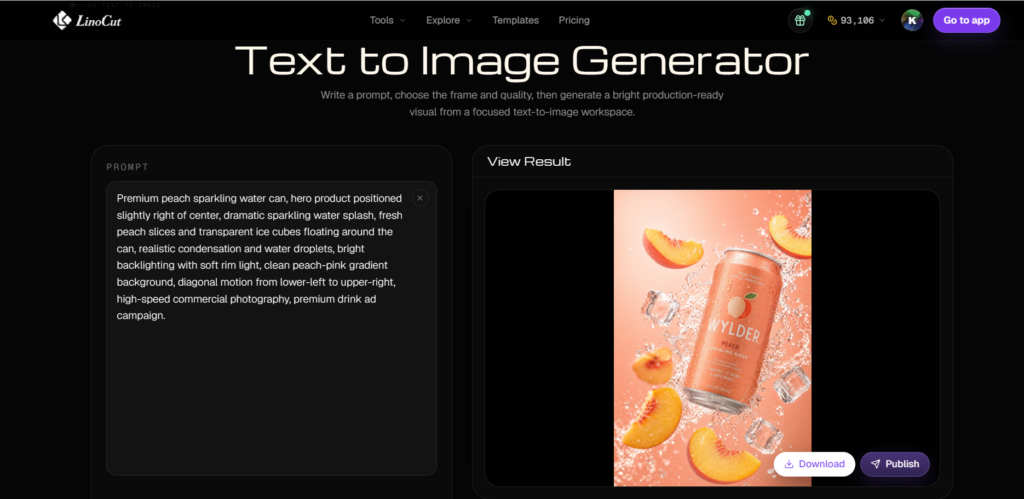
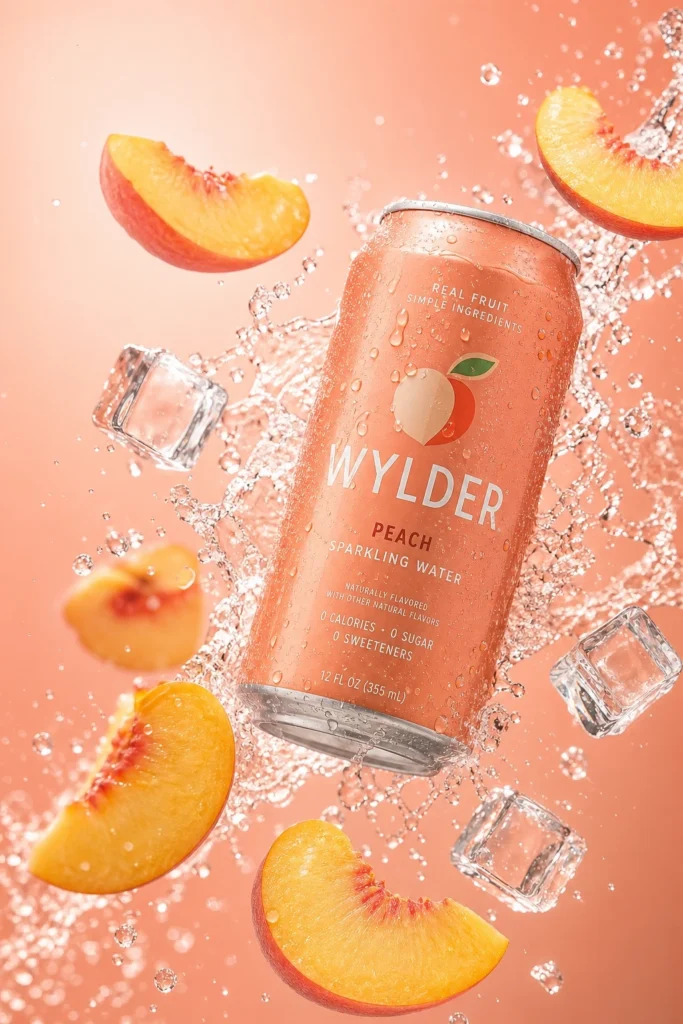
Premium peach sparkling water can, hero product positioned slightly right of center, dramatic sparkling water splash, fresh peach slices and transparent ice cubes floating around the can, realistic condensation and water droplets, bright backlighting with soft rim light, clean peach-pink gradient background, diagonal motion from lower-left to upper-right, high-speed commercial photography, premium drink ad campaign.
This formula works because it gives the AI both product information and creative direction.
Common Drink Ad Design Mistakes
Mistake 1: Too Many Objects in Drink Ads
Adding every possible fruit, ice cube, flower, splash, and decorative element can make the composition chaotic.
Fix: Use one hero product and two or three supporting visual elements.
Mistake 2: Weak Product Hierarchy
If the product, ingredients, background, and typography all have the same visual weight, viewers won't know where to look.
Fix: Make the beverage the strongest focal point.
Mistake 3: Flat Lighting in Drink Ads
Even a detailed product can look ordinary with weak lighting.
Fix: Try backlighting, rim lighting, directional lighting, or strong contrast.
Mistake 4: No Negative Space
A visually impressive image can still fail as an advertisement if there is nowhere to place copy.
Fix: Tell the AI exactly where you want clean space.
Mistake 5: Generic Drink Ad Prompts
“A beautiful soda advertisement” is too vague.
Fix: Describe the product, movement, composition, ingredients, lighting, camera style, color palette, and advertising mood.
Final Thoughts on Creating Better Drink Ads
Effective drink ads are not simply attractive product images. They are carefully designed visual experiences.
Start with the beverage as the hero. Then use movement, liquid, ice, ingredients, lighting, color, perspective, and negative space to communicate the product's personality.
For refreshing beverages, emphasize coldness and transparency. For energy drinks, introduce motion and dramatic contrast. For fruit beverages, use ingredients and vibrant colors. For premium products, simplify the composition and focus on sophisticated lighting.
With AI image generation and LinoCut, you can explore multiple drink ad concepts, test different compositions, refine individual details, and develop visuals for social media, product launches, websites, and advertising campaigns.
The ultimate goal of a great drink ad is simple:
Don't just make people see the beverage. Make them want to drink it.
FAQs About AI Drink Ads
How can I make drink ads more eye-catching with AI?
Focus on visual tension, strong product hierarchy, dynamic liquid effects, dramatic lighting, attractive ingredients, and intentional negative space. A detailed drink ad prompt will generally produce more controllable results than a generic description.
What should I include in a drink ad prompt?
Include the beverage, packaging, product position, ingredients, liquid effects, lighting, background, composition, camera style, and advertising mood. Adding details such as condensation, ice, and water droplets can also make drink ads feel more realistic.
Can AI create different styles of drink ads?
Yes. You can create refreshing summer ads, energetic sports campaigns, luxury beverage posters, colorful fruit advertisements, minimalist product ads, and many other styles by changing the composition, lighting, color palette, and visual effects.
How do I leave space for text in AI drink ads?
Include phrases such as “clean negative space on the left for headline” or “empty upper area for advertising copy” in your prompt. This helps create a composition that can be adapted into a finished advertising poster.
Can I use LinoCut to refine AI drink ads?
Yes. You can use LinoCut to explore AI-generated beverage concepts and refine elements such as product size, background, composition, ingredients, and visual effects, making it easier to turn an initial concept into a polished drink ad.