The beauty industry has never been more visually competitive. Whether you're launching a new serum, promoting a moisturizer, or introducing an entire skincare collection, your advertisement often determines a customer's first impression before they ever read the product description.
Great skincare advertising isn't simply about showing a beautiful bottle. The most memorable campaigns create an emotional connection through lighting, color, composition, textures, and storytelling. They make products feel luxurious, trustworthy, scientific, natural, or aspirational—all within a single image.
Today, AI makes it possible to explore dozens of creative concepts without the time and cost of traditional product photography. Instead of being limited to one photoshoot, brands can experiment with different moods, compositions, ingredient stories, and campaign styles until they find the perfect creative direction.
In this guide, you'll learn how professional beauty advertisements are designed, discover the visual language behind premium skincare brands, and explore how AI can help you create stunning advertising campaigns for websites, social media, e-commerce stores, and product launches.
What Makes a Skincare Advertisement Memorable?
Every year, thousands of skincare advertisements are published across Instagram, Pinterest, TikTok, Shopify stores, and beauty magazines. Yet only a handful immediately capture attention and leave a lasting impression.
The difference rarely comes down to the product itself. Instead, it's the creative direction behind the advertisement.
Successful beauty campaigns don't just showcase skincare—they communicate a feeling. A luxury serum should feel sophisticated. A hydrating moisturizer should feel refreshing. A botanical cleanser should evoke nature and purity.
Before opening any AI image generator, it's worth understanding the visual language that beauty brands have been using for decades.
Luxury Is Created Through Simplicity
One of the biggest misconceptions in beauty advertising is that premium products require complicated visuals.
In reality, luxury brands often remove visual clutter instead of adding more elements.
Think about high-end skincare advertisements. The product usually sits confidently in the center of the composition, surrounded by generous negative space. The lighting is controlled, the background is clean, and every decorative element serves a purpose.
Instead of overwhelming the viewer with information, luxury advertisements allow the product to become the hero.
When creating AI skincare ads, less is often more.
Rather than asking AI to generate dozens of floating ingredients, dramatic effects, and colorful backgrounds all at once, start with a clean composition and introduce supporting elements gradually.
Every Ingredient Tells a Story
Great beauty advertising doesn't simply display ingredients—it transforms them into visual storytelling.
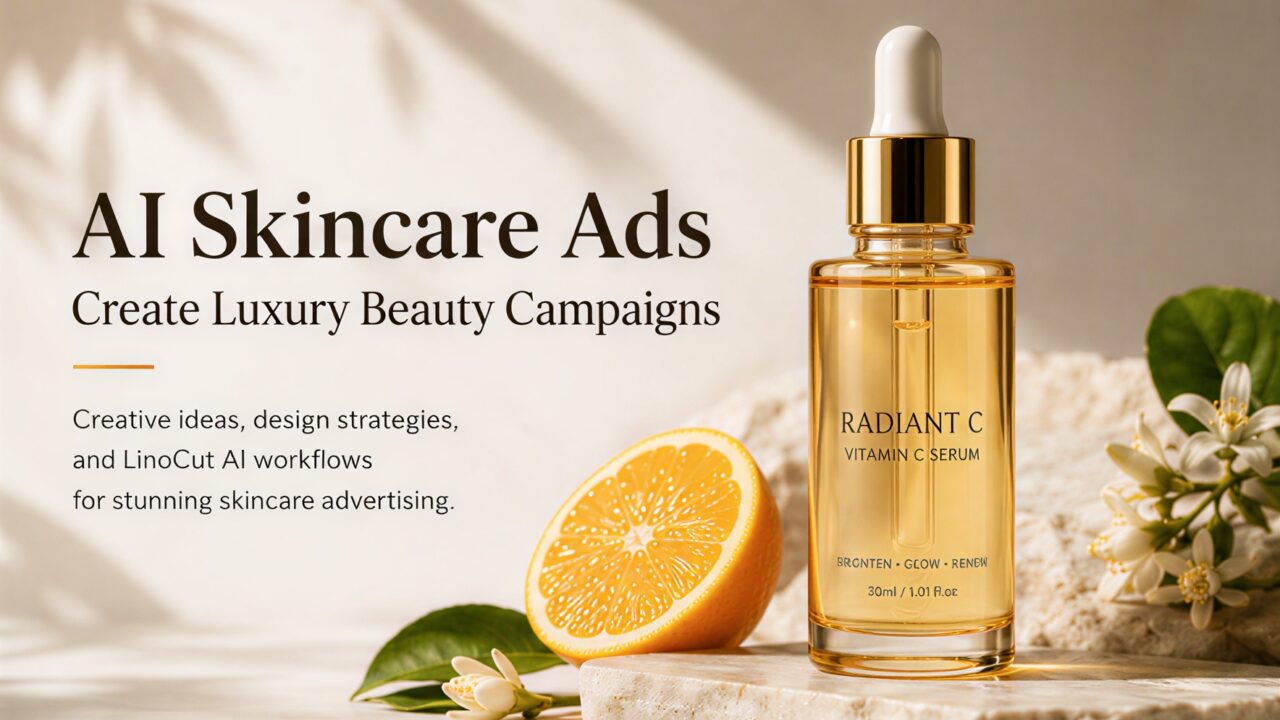
A Vitamin C serum isn't represented by a chemical formula. Instead, brands often use warm sunlight, fresh citrus slices, glowing golden liquids, and vibrant orange tones to communicate brightness and radiance.
A hyaluronic acid product might feature crystal-clear water, floating droplets, soft blue gradients, and transparent glass surfaces to reinforce hydration.
Botanical skincare campaigns often combine fresh leaves, flowers, natural stone, and soft morning light to create an organic, calming atmosphere.
These visual cues help customers understand the product's benefits before reading a single word.
When designing AI-generated skincare ads, think beyond the bottle. Ask yourself:
- What ingredient should become part of the story?
- What environment reinforces the product's purpose?
- What emotion should the viewer feel?
Answering these questions will lead to stronger creative concepts.
Color Shapes Brand Perception
Color is one of the fastest ways to communicate a brand's personality.
Luxury skincare brands often rely on restrained palettes, while youthful beauty brands embrace brighter, more energetic colors.
Some common approaches include:
| Color | Common Association | Best For |
|---|---|---|
| White | Purity, cleanliness, simplicity | Clinical skincare, minimalist brands |
| Gold | Luxury, exclusivity, premium quality | Anti-aging products, luxury serums |
| Soft Green | Natural ingredients, wellness | Organic and botanical skincare |
| Light Blue | Hydration, freshness, science | Moisturizers and water-based products |
| Beige & Cream | Softness, elegance | Everyday skincare collections |
| Black | Prestige, sophistication | Premium nighttime skincare |
Rather than choosing colors randomly, let your palette reinforce the product story.
Texture Sells Skincare Better Than Words
Unlike fashion advertising, skincare marketing focuses heavily on texture.
Consumers want to imagine:
- A lightweight serum absorbing into the skin.
- Rich moisturizer with a silky finish.
- Crystal-clear water splashing around a bottle.
- Smooth cream with luxurious consistency.
- Glass packaging reflecting soft studio lighting.
These details create sensory experiences that static product descriptions cannot.
When writing prompts or planning a campaign, include textures as an essential design element—not an afterthought.
Lighting Creates Emotion
Lighting is one of the most overlooked aspects of AI-generated advertisements.
Changing the lighting alone can completely transform how a product feels.
Soft diffused lighting creates calm, clean, and approachable skincare campaigns.
Golden-hour lighting adds warmth and vitality, making products feel healthy and radiant.
High-contrast studio lighting communicates sophistication and premium quality.
Meanwhile, backlighting through transparent bottles can emphasize ingredients such as serums, oils, and essences.
Professional beauty advertisements rarely rely on default lighting. Every shadow and highlight contributes to the overall brand identity.
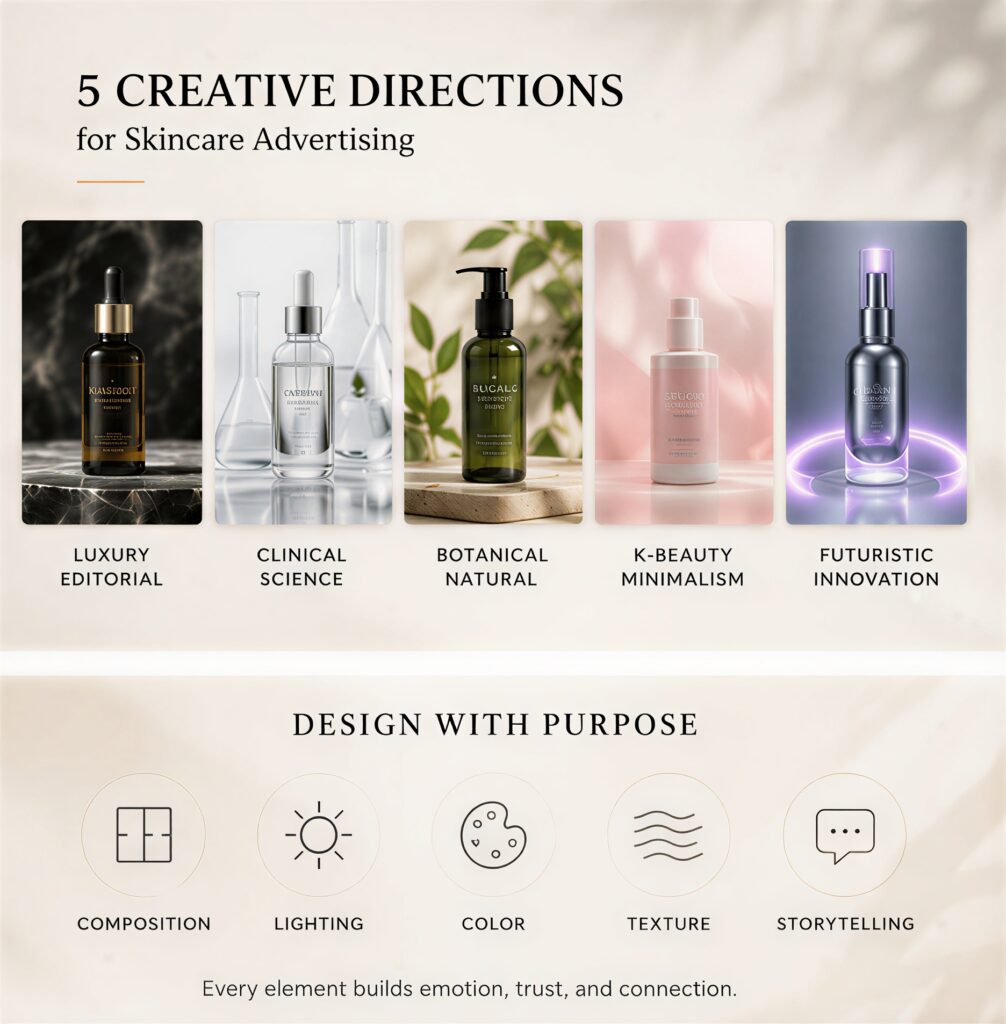
Five Creative Directions for Skincare Advertising
One skincare product can be advertised in dozens of different ways.
Before generating any images, choose a creative direction that matches your audience, product positioning, and brand personality.
Instead of asking AI to "make a skincare advertisement," define the creative style first.
Below are five proven directions used by successful beauty brands.
Luxury Editorial
Luxury editorial campaigns focus on elegance, restraint, and sophistication.
Inspired by high-fashion magazines, these advertisements emphasize premium materials, dramatic lighting, and refined compositions.
Typical visual characteristics include:
- Black or neutral backgrounds
- Marble or polished stone surfaces
- Glass reflections
- Soft spotlight lighting
- Minimal decorative elements
- Large areas of negative space
This style works especially well for:
- Anti-aging serums
- Premium facial oils
- Luxury skincare collections
- High-end product launches
Creative Direction Example
A luxury peptide serum standing on black marble, surrounded by subtle golden reflections and soft mist, photographed with dramatic editorial lighting, leaving clean space for elegant typography.
Clinical & Dermatologist-Inspired
Not every skincare brand wants to feel luxurious. Some brands build trust through science and simplicity.
Clinical-style advertisements emphasize effectiveness, transparency, and professional care.
Common characteristics include:
- Bright white backgrounds
- Laboratory-inspired environments
- Glass beakers and transparent materials
- Clean geometric layouts
- Cool lighting
- Minimal color palettes
Ideal for:
- Sensitive skin products
- Dermatologist-approved skincare
- Medical-grade formulations
- Ingredient-focused campaigns
The goal isn't glamour—it's credibility.
Botanical & Natural Beauty
Natural skincare brands often focus on ingredients before products.
Instead of placing the bottle in an empty studio, the advertisement becomes part of a larger environment.
Visual elements commonly include:
- Fresh leaves
- Flowers
- Herbs
- Stone textures
- Water droplets
- Warm natural sunlight
- Earth-inspired colors
This creative direction is perfect for:
- Organic skincare
- Vegan beauty products
- Sustainable brands
- Botanical ingredient collections
Rather than looking manufactured, the advertisement should feel fresh and authentic.
K-Beauty Minimalism
Korean skincare brands have developed one of the most recognizable visual identities in the beauty industry.
Instead of dramatic luxury, K-Beauty emphasizes cleanliness, softness, and everyday elegance.
Typical features include:
- Pastel color palettes
- Bright natural lighting
- Smooth gradients
- Airy compositions
- Simple props
- Soft shadows
- Fresh, youthful atmosphere
This direction works well for:
- Daily moisturizers
- Hydrating toners
- Sleeping masks
- Lightweight sunscreens
The result feels approachable while maintaining a premium aesthetic.
Futuristic Beauty Campaign
As AI and biotechnology continue to influence skincare innovation, many brands are embracing futuristic visual identities.
These campaigns combine science fiction with luxury product photography.
Visual characteristics include:
- Metallic textures
- Floating products
- Liquid chrome effects
- Transparent acrylic platforms
- Neon accents
- Abstract geometric shapes
- Reflective surfaces
This style is particularly suitable for:
- High-tech skincare
- Peptide and collagen products
- Anti-aging innovations
- AI-powered beauty brands
The goal is to communicate innovation without sacrificing elegance.
Choosing the Right Creative Direction
There isn't a single "best" skincare advertising style.
Instead, ask yourself three simple questions before creating your campaign:
- Who is your target audience? Luxury shoppers, skincare beginners, or Gen Z beauty enthusiasts?
- What emotion should the advertisement communicate? Trust, freshness, elegance, innovation, or natural wellness?
- Where will the advertisement be used? Instagram, Pinterest, Shopify, Amazon, or a homepage hero banner?
Once you have clear answers, AI becomes much more than an image generator—it becomes a creative partner capable of turning a strong concept into a complete visual campaign.
How to Design Creative Skincare Ads with LinoCut AI
Creating a beautiful skincare advertisement isn't about finding the perfect prompt on your first try. Professional creative teams rarely begin with production—they begin with ideas.
They discuss the target audience, brand personality, campaign goals, color palettes, photography styles, and emotional direction long before a camera is involved.
The same mindset applies when designing AI-powered beauty campaigns.
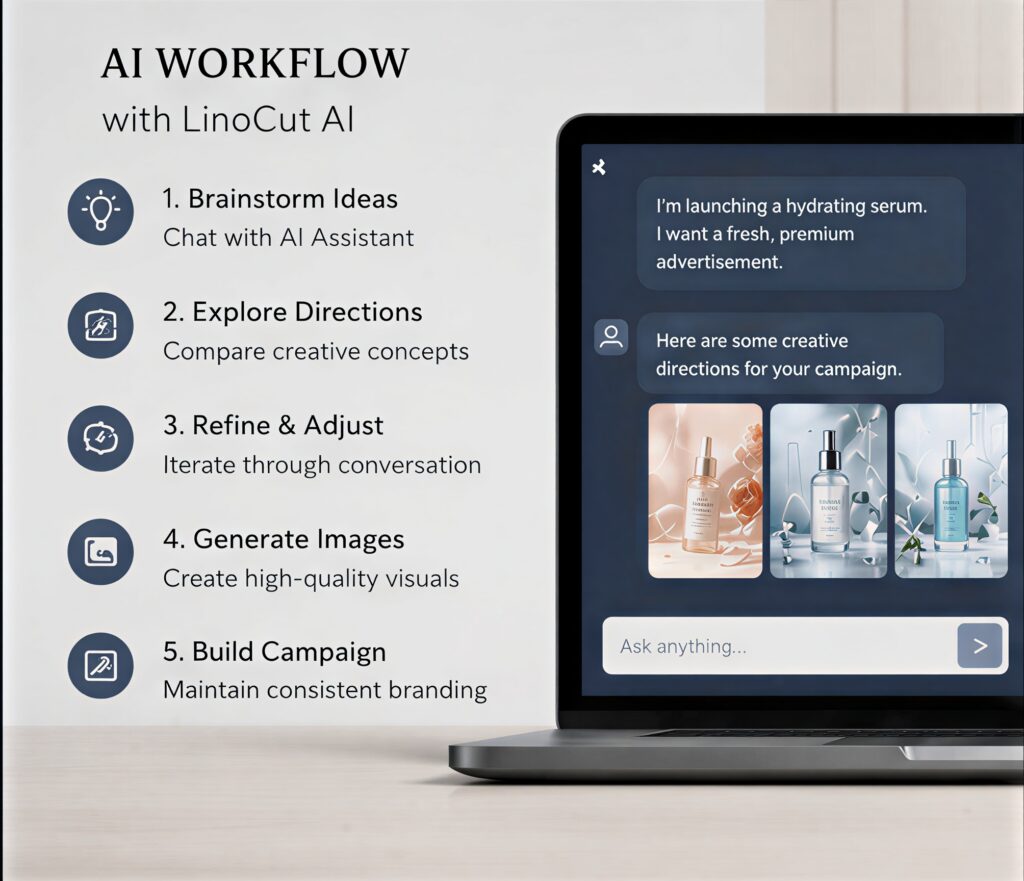
Instead of treating AI as a simple image generator, treat it as your creative partner. With LinoCut AI, you can brainstorm concepts, refine ideas through conversation, experiment with different visual directions, and build a complete campaign from a single product.
Here's a workflow that mirrors how many creative agencies approach beauty advertising.
Step 1: Start with a Conversation, Not a Prompt
One of the biggest mistakes beginners make is jumping directly into image generation.
Typing something like:
Luxury skincare advertisement
usually produces generic results because the AI doesn't understand your brand, audience, or creative goals.
A better approach is to start a conversation with the LinoCut AI Assistant.
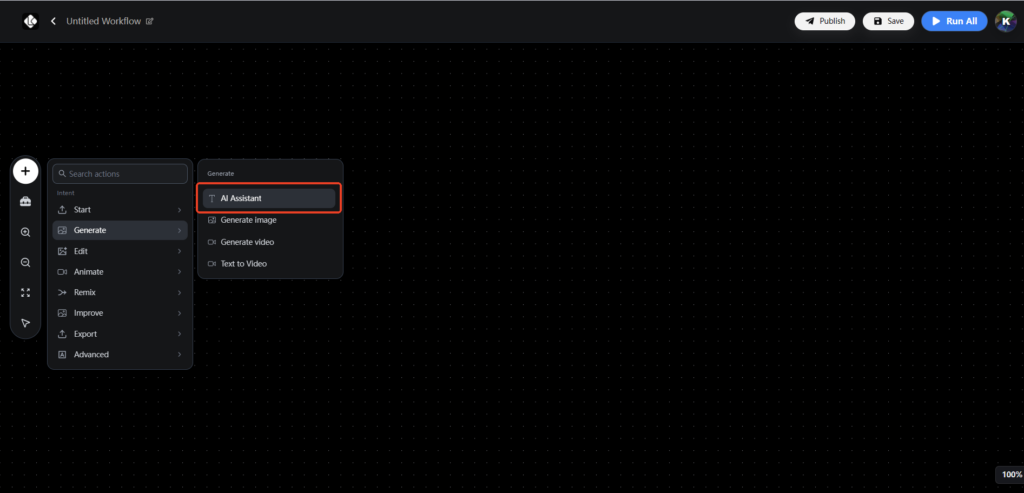
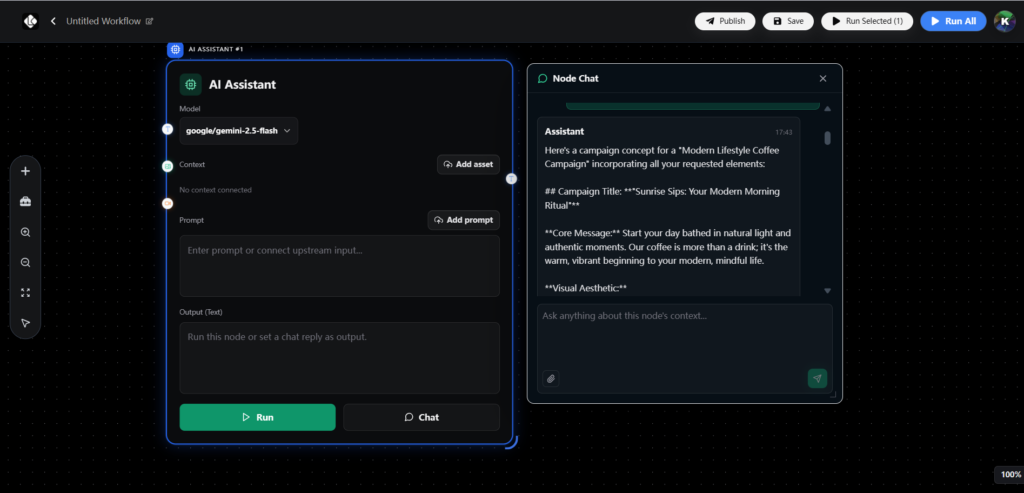
Instead of asking for an image immediately, explain your project just as you would to a creative director.
For example:
I'm launching a Vitamin C serum for women aged 25–35. The brand feels modern, premium, and minimalist. I want the campaign to look luxurious without feeling overly dramatic.
Rather than generating an image straight away, the AI Assistant can help you explore different creative possibilities.
It might suggest directions such as:
Concept 1: Modern Luxury
- White and gold color palette
- Clean marble background
- Warm sunrise lighting
- Elegant editorial composition
Perfect for premium skincare collections.
Concept 2: Fresh Botanical
- Citrus slices
- Dew-covered leaves
- Soft natural lighting
- Organic lifestyle aesthetic
Ideal for products focused on natural ingredients.
Concept 3: Clinical Innovation
- Transparent acrylic platforms
- Glass laboratory props
- Minimal blue-and-white palette
- Scientific beauty campaign
Suitable for dermatologist-inspired brands.
Instead of choosing one idea blindly, you can compare multiple concepts before generating a single image.
This saves time and often leads to stronger creative decisions.
Step 2: Turn Inspiration into Original Designs
Creative inspiration is everywhere.
You might discover a beautiful campaign on Pinterest, admire a luxury cosmetic advertisement on Instagram, or notice an elegant product display while browsing a beauty brand's website.
Rather than copying those designs, use them as creative references.
Upload the inspiration image to the LinoCut AI Assistant and ask questions like:
What makes this advertisement feel luxurious?
or
Analyze the composition and create a new concept inspired by this style.
The AI can identify elements such as:
- Composition
- Camera angle
- Lighting direction
- Product placement
- Color harmony
- Typography positioning
- Material textures
- Overall mood
Instead of recreating the same advertisement, the AI helps you understand the design language behind it.
For example, after analyzing a luxury serum advertisement, it might suggest:
- Increase the amount of negative space.
- Move the product closer to the visual center.
- Replace hard shadows with soft directional lighting.
- Introduce subtle water reflections to emphasize hydration.
- Simplify the background to keep the focus on the bottle.
These insights become the foundation for an original campaign that reflects your own brand identity.
Step 3: Refine the Creative Direction Through Conversation
Professional advertising rarely succeeds on the first draft.
Creative teams review concepts, adjust details, and refine visual direction until every element aligns with the brand.
You can follow the same process with LinoCut AI.
Instead of rewriting long prompts repeatedly, simply continue the conversation.
For example:
Make it feel more premium.
The AI may recommend:
- Darker shadows
- Softer highlights
- Gold accents
- Cleaner composition
- More elegant typography space
Or perhaps your campaign feels too formal.
You could ask:
Make it more suitable for Gen Z skincare consumers.
The AI might respond with suggestions such as:
- Brighter pastel colors
- Playful gradients
- Modern packaging presentation
- Dynamic composition
- Trend-forward beauty styling
You can continue refining with requests like:
- Add subtle water splashes.
- Make the bottle appear larger.
- Use softer lighting.
- Create a cleaner background.
- Emphasize the glass texture.
- Increase the feeling of freshness.
- Make it look suitable for a luxury magazine cover.
Each adjustment moves the campaign closer to your creative vision without starting from scratch.
Step 4: Explore Multiple Creative Directions Before Choosing One
One of AI's greatest advantages is speed.
Traditional advertising often requires selecting a single direction before production begins because photography is expensive and time-consuming.
With AI, you can test several concepts in minutes.
For the same skincare product, ask LinoCut AI to generate multiple campaign directions.
For example, a hyaluronic acid serum could be visualized as:
Direction A: Luxury Editorial
- Black marble platform
- Crystal-clear bottle
- Dramatic spotlight
- Elegant magazine aesthetic
Direction B: Hydration Story
- Transparent water ripples
- Floating droplets
- Soft blue gradients
- Fresh, clean atmosphere
Direction C: Botanical Wellness
- Fresh eucalyptus leaves
- Natural stone textures
- Morning sunlight
- Organic beauty campaign
Direction D: Futuristic Innovation
- Floating acrylic platforms
- Chrome reflections
- Metallic silver palette
- Modern biotechnology aesthetic
Instead of deciding which concept is best before seeing it, you can compare each visual direction and select the strongest foundation for your campaign.
Step 5: Build an Entire Product Collection with One Visual Language
Professional beauty brands rarely advertise a single product in isolation.
Customers often discover a collection rather than an individual item.
Imagine you've designed a successful campaign for a Vitamin C serum.
Instead of creating every future advertisement from scratch, ask the AI Assistant to expand the campaign.
For example:
Create matching visuals for the cleanser, toner, moisturizer, and eye cream while keeping the same visual identity.
The AI can maintain consistency across every design by preserving:
- Color palette
- Lighting style
- Background materials
- Product positioning
- Camera perspective
- Composition
- Brand mood
The result is a cohesive product family rather than a collection of unrelated advertisements.
This consistency is especially valuable for:
- Shopify product pages
- Landing pages
- Instagram carousel posts
- Pinterest collections
- Product launch campaigns
- Seasonal promotions
When every visual shares the same design language, your brand appears more polished, recognizable, and trustworthy.
Step 6: Keep Iterating Until the Design Feels Like Your Brand
The first image is rarely the final image.
The strongest campaigns are built through iteration.
After generating your initial concepts, continue refining them based on your marketing goals.
Ask questions such as:
- Would this work better for a homepage hero banner?
- Does the product stand out enough on a mobile screen?
- Is there enough space for promotional copy?
- Would a warmer color palette improve the emotional appeal?
- Does the composition feel balanced?
Because the conversation remains connected, the AI understands the context of your project and can make targeted improvements instead of restarting the creative process each time.
Think of the AI Assistant as a long-term creative collaborator rather than a one-time prompt generator.
The more you iterate, the more your campaign evolves into something that feels uniquely aligned with your brand.
From a Single Product to a Complete Beauty Campaign
A successful skincare campaign isn't measured by one beautiful image—it's measured by how consistently your visuals communicate the same story across every customer touchpoint.
With LinoCut AI, your workflow can evolve naturally:
Creative Idea → Visual Exploration → Prompt Refinement → Image Generation → Brand Consistency → Multi-Platform Campaign
By combining conversation-driven ideation with AI image generation, you can spend less time struggling with prompts and more time developing advertisements that feel intentional, memorable, and unmistakably yours.
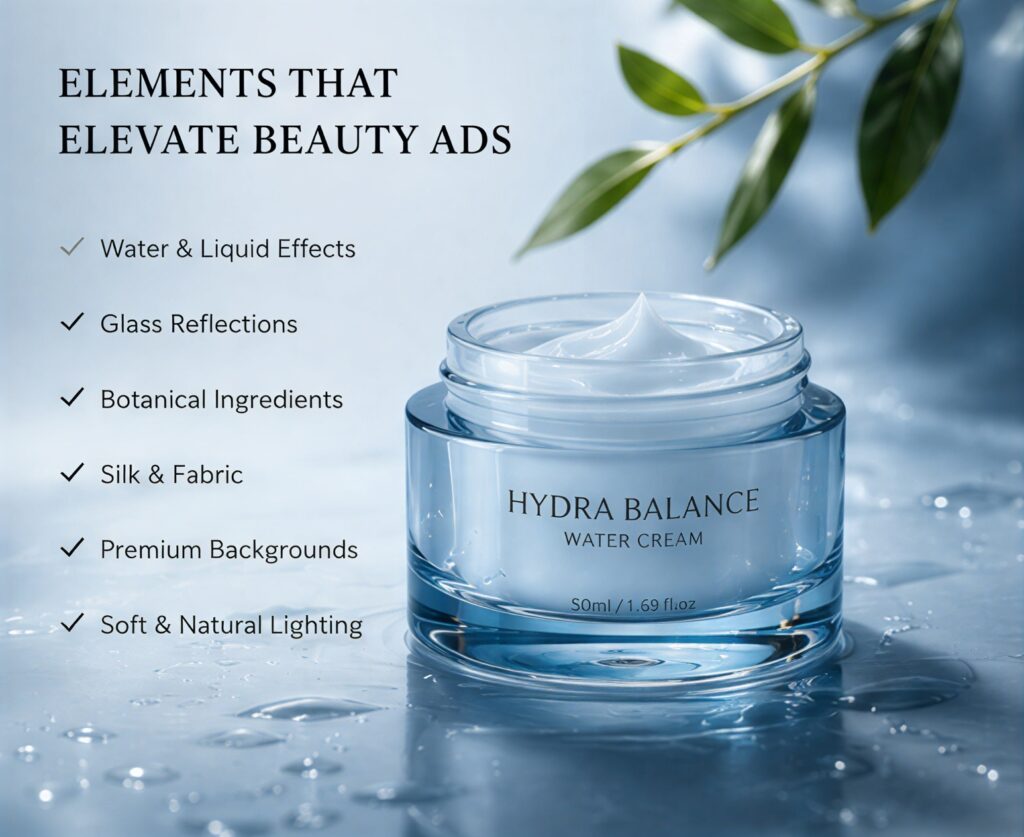
Creative Elements That Instantly Elevate Beauty Ads
The difference between an average skincare advertisement and one that feels worthy of a luxury beauty magazine often comes down to the small details.
Luxury brands rarely rely on complicated graphics. Instead, they use carefully chosen visual elements to reinforce a product's story and create an emotional response.
These elements can dramatically improve AI-generated skincare advertisements when used with intention.
Floating Products Create a Premium Feel
Floating product compositions have become a signature style in modern beauty advertising.
By lifting the product off the surface, the advertisement immediately feels lighter, cleaner, and more luxurious. It also creates a sense of innovation and sophistication that works especially well for premium skincare.
Floating compositions are ideal for:
- Facial serums
- Essence bottles
- Moisturizers
- Luxury cosmetic launches
To make the effect believable, combine the product with subtle shadows or transparent acrylic platforms rather than leaving it suspended without visual support.
Creative Tip
Floating doesn't always mean unrealistic. A slight shadow beneath the product helps create depth while maintaining a clean, premium aesthetic.
Water Is More Than Decoration
Few elements communicate skincare benefits as effectively as water.
Water can symbolize:
- Hydration
- Purity
- Freshness
- Calmness
- Scientific skincare
Different products benefit from different water treatments.
For example:
Hydrating Serum
Use:
- Floating water droplets
- Gentle ripples
- Transparent waves
Facial Cleanser
Use:
- Splash effects
- Flowing water
- Fresh foam textures
Luxury Essence
Use:
- Calm reflective water
- Mirror-like surfaces
- Soft reflections
Rather than overwhelming the composition, water should guide attention toward the product.
Glass Reflections Communicate Quality
Glass plays an important role in premium beauty photography.
Soft reflections help skincare bottles feel:
- Expensive
- Clean
- Modern
- Professionally photographed
Instead of placing products on plain backgrounds, consider using:
- Transparent acrylic blocks
- Reflective glass tables
- Frosted glass panels
- Curved glass surfaces
These materials create subtle highlights that enhance product packaging without distracting from it.
For transparent bottles, reflections also emphasize the clarity and purity of the formula inside.
Botanical Ingredients Build Trust
Natural ingredients are one of the strongest storytelling tools in skincare advertising.
However, effective beauty campaigns don't simply scatter random leaves around the bottle.
Choose ingredients that reinforce the product's message.
Examples include:
| Product | Supporting Visuals |
|---|---|
| Vitamin C Serum | Orange slices, citrus leaves, sunlight |
| Green Tea Cleanser | Tea leaves, soft mist, fresh greenery |
| Rose Toner | Rose petals, pink gradients, water droplets |
| Aloe Vera Gel | Aloe leaves, transparent gel texture |
| Marine Skincare | Ocean waves, shells, sea minerals |
Every supporting element should strengthen the product story rather than compete with it.
Fabric Adds Softness and Elegance
Flowing fabric is frequently used in luxury beauty campaigns because it introduces movement without making the composition feel busy.
Silk, satin, and sheer fabrics can suggest:
- Soft skin
- Comfort
- Luxury
- Feminine elegance
For example:
A moisturizing cream placed beside flowing ivory silk instantly feels more refined than the same product placed on a plain surface.
Fabric also works well for creating gentle leading lines that guide the viewer's eye toward the product.
Ice, Crystal, and Light for Cooling Products
Cooling products benefit from visual cues that reinforce freshness.
Instead of relying solely on blue backgrounds, consider elements such as:
- Ice crystals
- Frosted glass
- Crystal blocks
- Cool mist
- Soft blue reflections
These details subtly communicate hydration and cooling effects while maintaining a premium appearance.
Let Light Become Part of the Composition
Lighting isn't only about visibility.
In beauty advertising, light itself often becomes a design element.
Examples include:
- Sunlight passing through transparent serum bottles
- Golden backlighting illuminating essential oils
- Soft glow behind premium packaging
- Spotlight emphasizing a hero product
When used thoughtfully, light creates depth, mood, and visual hierarchy without adding unnecessary objects.
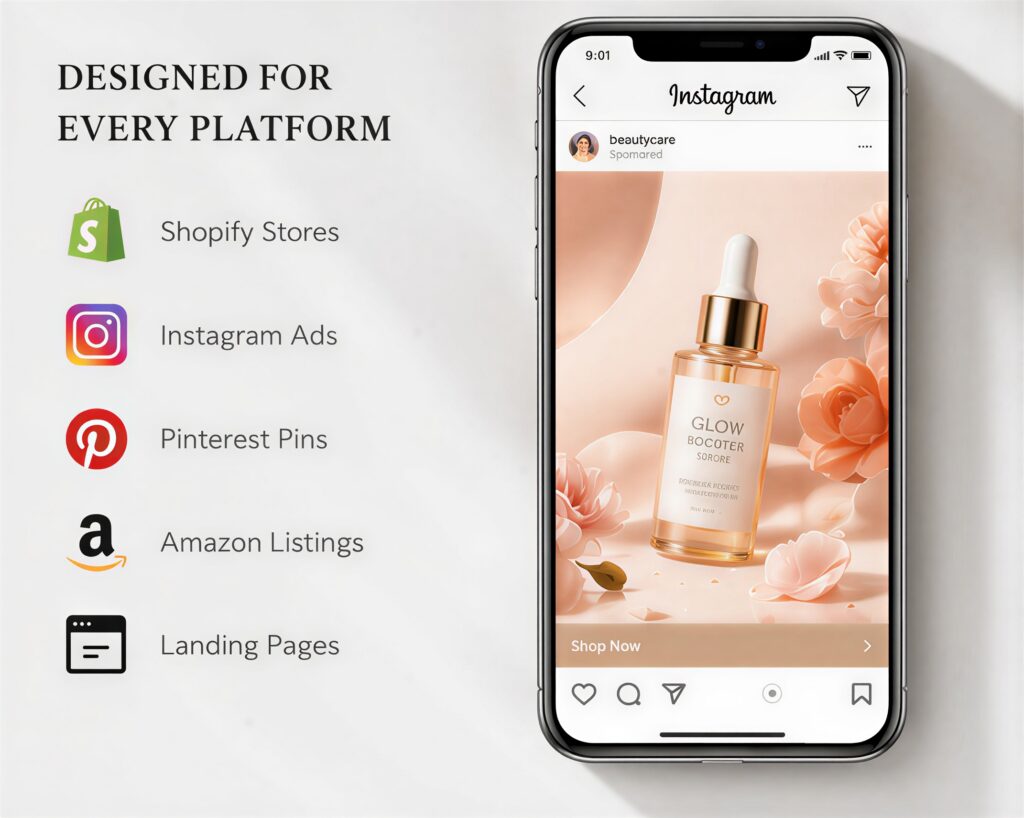
Designing Skincare Ads for Different Marketing Channels
A skincare advertisement that performs well on Instagram may not work for a Shopify homepage.
Each platform has different viewing habits, layouts, and marketing goals.
Rather than creating one image for every purpose, adapt your creative direction to the platform where customers will see it.
Shopify Hero Banners
A homepage banner introduces your brand before customers begin browsing.
Because text, buttons, and navigation are layered over the image, avoid placing the product in the exact center if it will interfere with the headline.
A strong hero banner should include:
- One clear hero product
- Generous negative space
- Balanced composition
- Soft background textures
- Clear focal point
Keep decorative elements minimal so the product remains the center of attention.
Instagram Advertisements
Instagram is highly competitive.
Users decide within seconds whether to continue scrolling.
Effective skincare advertisements for Instagram often feature:
- Bold visual focus
- Bright lighting
- Strong product contrast
- Clean backgrounds
- Minimal text inside the image
Carousel posts can also tell a story.
For example:
- Product introduction
- Ingredient highlight
- Texture close-up
- Lifestyle application
- Call-to-action
This sequence creates more engagement than repeating similar product images.
Pinterest Pins
Pinterest users are actively looking for inspiration rather than immediate purchases.
Instead of creating aggressive advertisements, design images that feel aspirational.
Successful Pinterest skincare visuals often include:
- Vertical compositions
- Elegant color palettes
- Editorial photography
- Lifestyle-inspired scenes
- Premium packaging
Clean layouts with breathing room generally perform better than overly busy designs.
Amazon Product Listings
Amazon shoppers focus on product information.
Your hero image should emphasize clarity rather than atmosphere.
Supporting images can then showcase:
- Ingredients
- Product texture
- Benefits
- Packaging details
- Usage scenarios
Avoid excessive decorative elements that distract from the product itself.
Landing Pages
Landing pages give you more creative freedom because multiple visuals work together to tell a story.
Rather than relying on one advertisement, build a complete visual journey.
For example:
- Hero banner introducing the product
- Ingredient-focused section
- Product texture close-up
- Lifestyle photography
- Before-and-after comparison
- Product collection overview
Keeping the same lighting style, color palette, and composition across every image helps create a cohesive brand experience.
Design for Consistency, Not Just Creativity
Beautiful individual advertisements are valuable, but recognizable brands are built through consistency.
When designing a skincare campaign, ask yourself:
- Do these visuals feel like they belong to the same collection?
- Would someone recognize the brand without seeing the logo?
- Are the colors, lighting, and composition consistent across every platform?
The strongest beauty campaigns aren't remembered because of one extraordinary image—they're remembered because every image tells the same visual story.
By combining thoughtful advertising principles with AI-assisted creativity, you can produce campaigns that not only capture attention but also strengthen long-term brand identity.Common Mistakes When Creating AI Skincare Ads
AI can generate beautiful images in seconds, but a beautiful image isn't always an effective advertisement. Many AI-generated skincare visuals look impressive at first glance yet fail to communicate the product's value or reflect the brand's identity.
Understanding these common mistakes will help you create campaigns that look more professional and convert better.
Prioritizing Visual Effects Over the Product
It's easy to get carried away with dramatic lighting, water splashes, flowers, and floating particles. While these elements can enhance a composition, they should never become the main focus.
Ask yourself one simple question:
If someone sees the ad for two seconds, what will they notice first?
If the answer isn't the product, the composition needs to be simplified.
A premium skincare advertisement should always have one clear hero product, with every supporting element directing attention back to it.
Using Visual Elements That Don't Match the Product
Every design choice should reinforce the product story.
For example:
- A hydration serum pairs naturally with water, glass, and transparent textures.
- A botanical cleanser works well with leaves, flowers, and natural stone.
- An anti-aging cream benefits from elegant lighting and premium materials rather than playful colors.
Adding random decorative objects simply because they look attractive often weakens the overall message.
A good creative direction always answers one question:
Why is this element here?
Ignoring Brand Consistency
Many brands create beautiful individual advertisements, but each campaign looks completely different.
One week the brand feels luxurious.
The next week it feels playful.
Then suddenly it looks clinical.
Without consistency, customers struggle to recognize your visual identity.
Before creating multiple advertisements, establish a simple creative system:
- Primary color palette
- Background materials
- Lighting style
- Product positioning
- Typography style
- Mood and tone
Once these decisions are made, every new advertisement becomes part of the same visual language.
Trying to Include Too Much Information
A skincare advertisement isn't a product manual.
Avoid trying to show:
- Every ingredient
- Every product benefit
- Every promotional message
- Every decorative effect
Instead, let one image communicate one primary idea.
For example:
A Vitamin C campaign could focus entirely on radiance.
A moisturizer could communicate deep hydration.
A botanical cleanser could highlight natural purity.
Clear messaging is almost always more effective than overwhelming complexity.
Forgetting Where the Advertisement Will Be Used
Designing without considering the final platform often leads to disappointing results.
A homepage hero banner needs space for headlines and buttons.
A Pinterest Pin benefits from a vertical composition.
An Amazon product image should emphasize clarity and packaging.
An Instagram advertisement should capture attention within seconds.
Before generating your images, decide where they will be published and build the composition around that purpose.
Frequently Asked Questions
What makes a skincare advertisement look luxurious?
Luxury skincare ads typically combine minimal compositions, premium materials, controlled lighting, and thoughtful use of negative space.
Rather than adding more decorative elements, luxury brands often remove distractions so the product becomes the clear focal point.
How can I make AI-generated skincare ads look more realistic?
Focus on realistic lighting, believable shadows, detailed product packaging, and natural material interactions.
Adding subtle reflections, accurate textures, and carefully selected supporting elements usually creates a more convincing commercial image than relying on excessive visual effects.
Should I generate one perfect image or multiple concepts?
Professional creative teams rarely settle on their first concept.
Generating several creative directions allows you to compare different moods, compositions, and storytelling approaches before choosing the strongest campaign.
Exploration is often the fastest path to better results.
How do I keep different product advertisements visually consistent?
Start by defining a visual identity for the brand.
Keep the same:
- Color palette
- Lighting style
- Background materials
- Camera perspective
- Composition principles
This creates a recognizable campaign across multiple products.
Can AI create advertisements suitable for luxury skincare brands?
Yes.
Modern AI image generators can produce high-end commercial visuals when provided with a clear creative direction.
The quality of the result depends less on the tool itself and more on the concept, composition, lighting, and iterative refinement behind the design.
What types of skincare products work best with AI advertising?
AI performs particularly well for products such as:
- Serums
- Moisturizers
- Cleansers
- Toners
- Face masks
- Sunscreens
- Facial oils
- Eye creams
These products naturally lend themselves to strong visual storytelling through ingredients, textures, and premium product photography.
Can AI help create a complete product campaign instead of a single image?
Absolutely.
Instead of designing one advertisement at a time, AI can help build an entire campaign with consistent creative direction.
From a hero product image to supporting visuals for social media, landing pages, and product collections, maintaining a unified visual style strengthens brand recognition and improves the customer experience.
Is AI replacing professional creative teams?
Not entirely.
AI is best viewed as a creative collaborator rather than a replacement.
It accelerates idea generation, concept exploration, and visual production, allowing designers and marketers to spend more time refining strategy and storytelling instead of repeating manual production work.
Conclusion
Exceptional skincare advertising isn't created by accident—it begins with a strong creative vision.
The most memorable beauty campaigns don't simply display a product; they tell a story through composition, lighting, color, materials, and carefully chosen visual details. Every element works together to communicate trust, quality, and emotion before a customer even reads the headline.
AI makes this creative process more accessible than ever.
Instead of being limited to a single concept, you can explore multiple campaign directions, experiment with different aesthetics, and refine ideas quickly without the cost of traditional product photography.
With LinoCut AI, the workflow goes beyond image generation.
You can brainstorm creative concepts with the built-in AI Assistant, analyze reference advertisements, refine prompts through natural conversation, and generate a complete collection of brand-consistent visuals for websites, social media, product launches, and marketing campaigns.
Whether you're introducing a new skincare brand, refreshing an existing product line, or creating content for your next beauty campaign, the combination of thoughtful advertising design and AI-powered creativity makes it easier to transform ideas into polished, professional visuals.
The best beauty advertisements don't start with a prompt—they start with a clear creative direction. Once that vision is defined, AI becomes a powerful partner in bringing it to life.