Let’s be honest: writing AI prompts is starting to feel like a stressful coding job.
AI-generated images are everywhere now. But if you’ve ever tried using them in real advertising campaigns, you’ve probably noticed something frustrating:
Most AI visuals look impressive individually — but fail completely as ad creatives.
They might look artistic. They might even go viral on social media.
But they often lack the things that actually matter in marketing:
- consistent visual identity
- clear product positioning
- emotional direction
- conversion-focused composition
- scalable creative structure
At Linocut.ai, we ran into this problem ourselves while building campaigns, testing concepts, and experimenting with AI-generated creative workflows.
The issue wasn’t image quality.
The issue was the lack of a system.
So instead of treating prompts as isolated text inputs, we started building what we now call:
An Ad Visual System
A structured workflow for generating scalable, consistent, high-converting advertising visuals using AI.
In this guide, we’ll break down how we approach product ad generation inside Linocut.ai — including multiple ad styles, reusable prompt structures, and workflow-based creative production.
Why Most AI Product Ads Fail
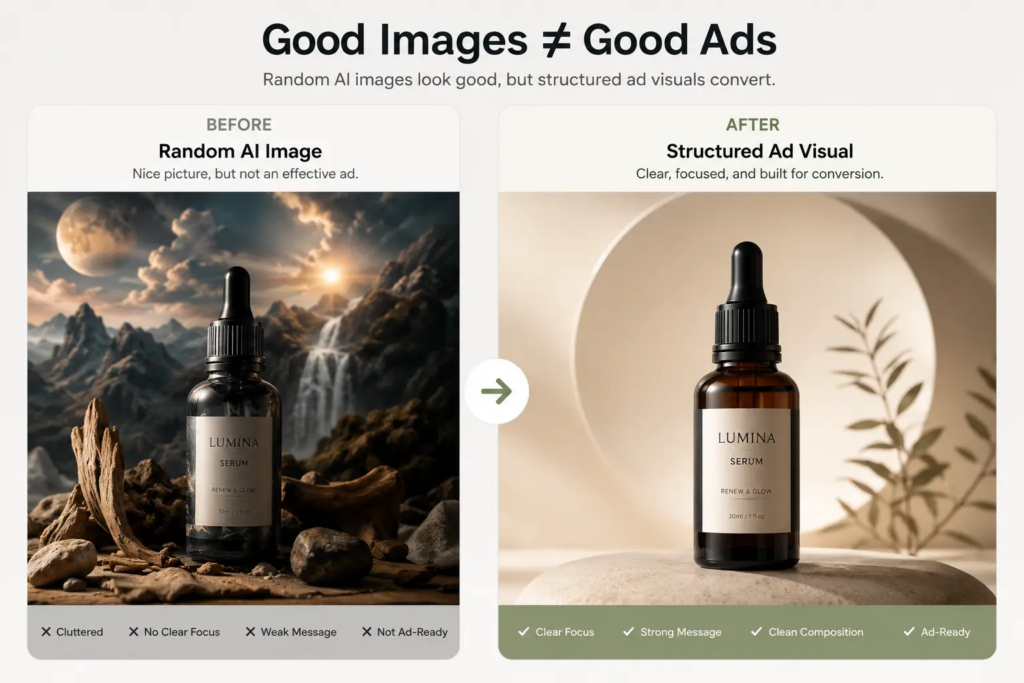
Most people generate AI ads like this:
Generate a product advertisement image for wireless earbuds
And while the output might look “good,” it usually has problems:
- random composition
- inconsistent lighting
- weak branding
- unclear emotional intent
- poor advertising hierarchy
The result is often an image that looks AI-generated rather than commercially usable.
The biggest misconception in AI advertising today is this:
Good images do not automatically become good ads.
Advertising visuals are systems. They require structure, intention, and repeatability. That’s where workflow-based generation becomes important.
The Linocut.ai Approach: Building an Ad Visual System
At Linocut.ai, we approach AI ad generation differently.
Instead of generating isolated images one by one, we structure the creative process into reusable visual components.
Our internal workflow usually follows this structure:
Product → Concept → Style → Composition → Lighting → Emotion → Output
Each layer controls a different part of the final advertising result.
This allows us to:
- maintain visual consistency
- generate scalable variations
- adapt creatives across platforms
- build reusable campaign systems
Instead of random outputs, we get controllable ad generation pipelines.
Step 1 — Product Focus Comes First
One of the most common mistakes in AI-generated ads is losing focus on the product itself.
Advertising visuals should immediately communicate:
- what the product is
- what category it belongs to
- what emotional value it represents
Inside Linocut.ai, we usually begin with a dedicated product-focus prompt.
High-quality advertising image of {product}, clearly visible, centered hero composition, premium presentation, commercial photography styleThis step establishes:
- product clarity
- visual hierarchy
- commercial framing
Without this foundation, the rest of the ad becomes visually confusing.
Step 2 — Build the Advertising Concept
Strong ads are rarely about the product alone.
They are about the feeling attached to the product.
That’s why the second layer focuses on conceptual positioning.
Create a conceptual advertising scene that communicates {emotion} and highlights {benefit}For example:
| Product | Emotion | Benefit |
| Coffee | focus | productivity |
| Skincare | confidence | self-care |
| Headphones | immersion | concentration |
This changes the output dramatically.
Instead of “showing a product,” the AI starts generating emotional storytelling.
Step 3 — Define the Visual Style
Style consistency is one of the biggest differences between random AI art and real advertising systems.
Most recognizable brands maintain visual coherence across every campaign.
To replicate this, we build reusable style layers.
Style Prompt
modern commercial photography, high-end advertising style, clean composition, professional studio lighting
Depending on the campaign, we may swap this with:
- cinematic commercial
- minimalist product photography
- luxury brand aesthetic
- UGC-style social content
This layer becomes reusable across multiple campaigns inside Linocut.ai workflows.
Step 4 — Control Composition for Conversion
Composition directly affects advertising performance.
A visually beautiful image can still fail if the product hierarchy is weak.
We usually structure composition intentionally for marketing use cases.
Composition Prompt
center composition, product hero shot, minimal background, strong visual hierarchy, negative space for marketing copy
This improves:
- readability
- CTA placement
- ad usability across formats
Especially for:
- Meta Ads
- TikTok creatives
- Instagram campaigns
- landing page visuals
Step 5 — Use Lighting to Shape Perception
Lighting controls emotional perception more than most prompts.
Flat lighting often creates generic-looking AI outputs.
Commercial lighting creates premium perception.
Lighting Prompt
soft studio lighting, rim light, cinematic shadows, high contrast, luxury commercial atmosphere
This layer is especially important for:
- beauty products
- electronics
- luxury branding
- cinematic advertising
The same product can feel cheap or premium depending entirely on lighting structure.
Step 6 — Add Emotional Positioning
Advertising is emotional before it is logical.
That’s why emotional direction becomes its own layer inside our workflows.
Emotion Prompt
evokes feelings of aspiration, trust, confidence, premium lifestyle, modern identity
Different emotional directions create completely different ad outputs.
Examples:
| Emotion | Typical Use |
| Trust | SaaS / healthcare |
| Aspiration | luxury products |
| Energy | sports brands |
| Calmness | wellness products |
This step helps move AI visuals closer to real advertising psychology.
Step 7 — Design the Background Environment
Background design is often overlooked in AI advertising.
But environment strongly affects perceived brand quality.
Background Prompt
minimal luxury background, abstract gradients, modern clean environment, premium commercial atmosphere
We typically avoid overly detailed backgrounds because they reduce product clarity.
For high-converting ads, simplicity often performs better.
Full Combined Advertising Prompt
After combining all layers, the final prompt system looks like this:
High-quality advertising image of {product}, centered hero composition, modern commercial photography style, soft studio lighting with rim light, minimal luxury background, cinematic high-end advertising feel, evokes aspiration and trust, clean visual hierarchy, premium brand aesthetic
This structure produces significantly more usable advertising outputs than generic AI prompts.
Three High-Converting Product Ad Types
One of the advantages of workflow-based generation inside Linocut.ai is that the same system can generate multiple advertising styles.
Here are the three most common campaign structures we use.
Type 1 — E-commerce Product Ads
These are optimized for direct conversion.
Characteristics
- clean backgrounds
- strong product visibility
- commercial clarity
- CTA-friendly layout
Best For
- Shopify stores
- Amazon products
- DTC brands
- performance marketing
Minimalist commercial product ad of over-ear headphones positioned in a centered hero composition. The headphones are vibrant green, floating above a clean, neutral background. A circular logo or symbol is subtly integrated behind the headphones. Above the product is a short, bold, sans-serif headline in black text, and below the product is brand typography in a simple, modern style. Studio lighting is soft and even, highlighting the texture and shape of the headphones, with crisp shadows for depth. Clean, conversion-oriented, commercial photography style, high-quality product shot, realistic textures, minimalist aesthetic
Create a surreal, minimalist, futuristic 3D advertisement for [Product], imagined in the year 2040. Center a single branded object in a clean, dreamy environment with soft ambient lighting and subtle surreal elements. Incorporate visual metaphors that reflect the brand’s identity in unexpected ways — such as floating, glowing, bending physics, or dreamlike distortion. Use elegant negative space, soft shadows, ambient glow, and futuristic textures. Style: cinematic, poetic, ethereal. Aspect ratio: 1:1, high detail.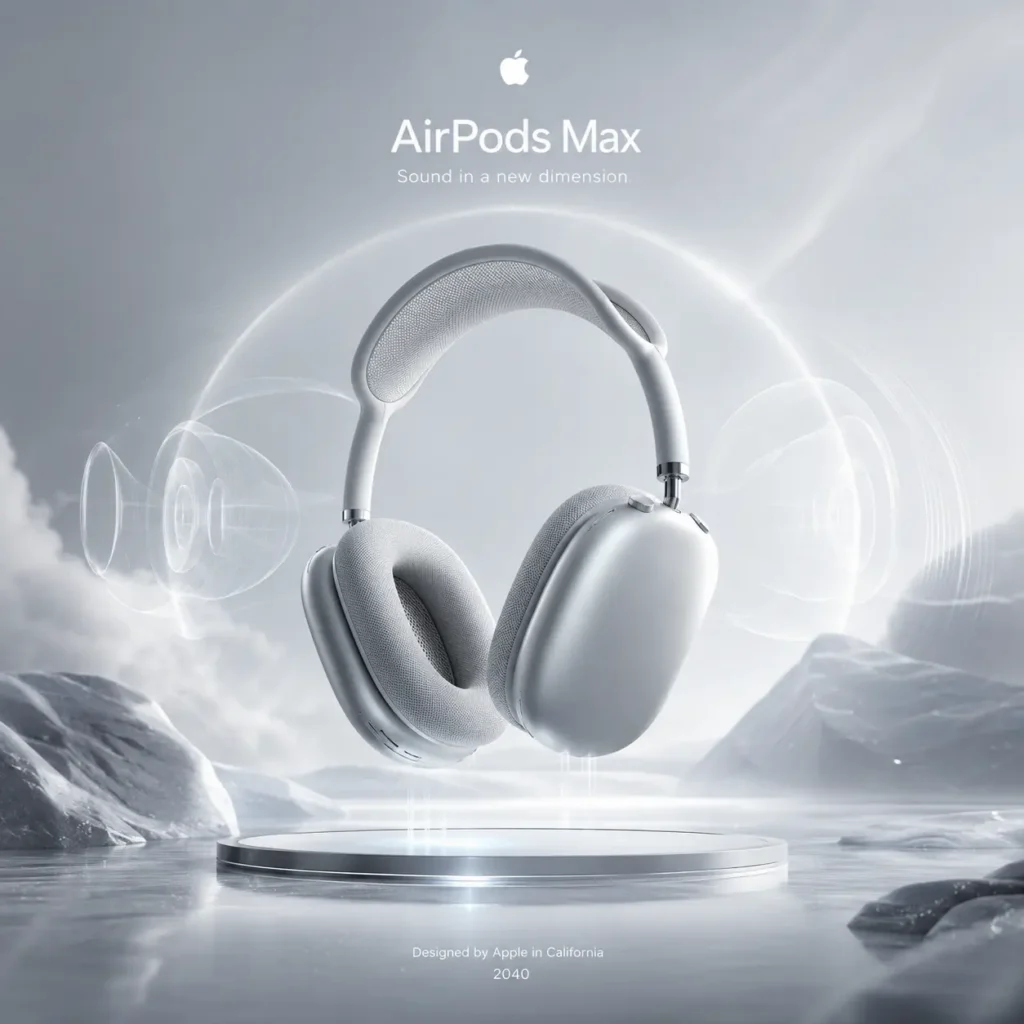
Type 2 — Lifestyle Advertising
Lifestyle ads focus more on emotional positioning than product isolation.
Characteristics
- real-world environments
- emotional storytelling
- human interaction
- aspirational mood
Best For
- Instagram campaigns
- TikTok creatives
- fashion brands
- wellness products
Close-up eye-level shot of a chubby beige Syrian hamster wearing [oversized aviator sunglasses], a red floral Hawaiian shirt, and straw fedora. Hamster is centered on a wooden surfboard riding tropical waves, water splashes frozen mid-air. Bright sunlit ocean background with scattered clouds. Hard key cinematic lighting, volumetric godrays, punchy HDR contrast, vibrant tropical color grading. Sharp detail on hamster’s face, whiskers, fur, and sunglasses; shallow depth of field with blurred background. Commercial action-sports editorial style, surrealist animal portrait, dynamic diagonal composition, Z-depth layering, 1:1 aspect ratio.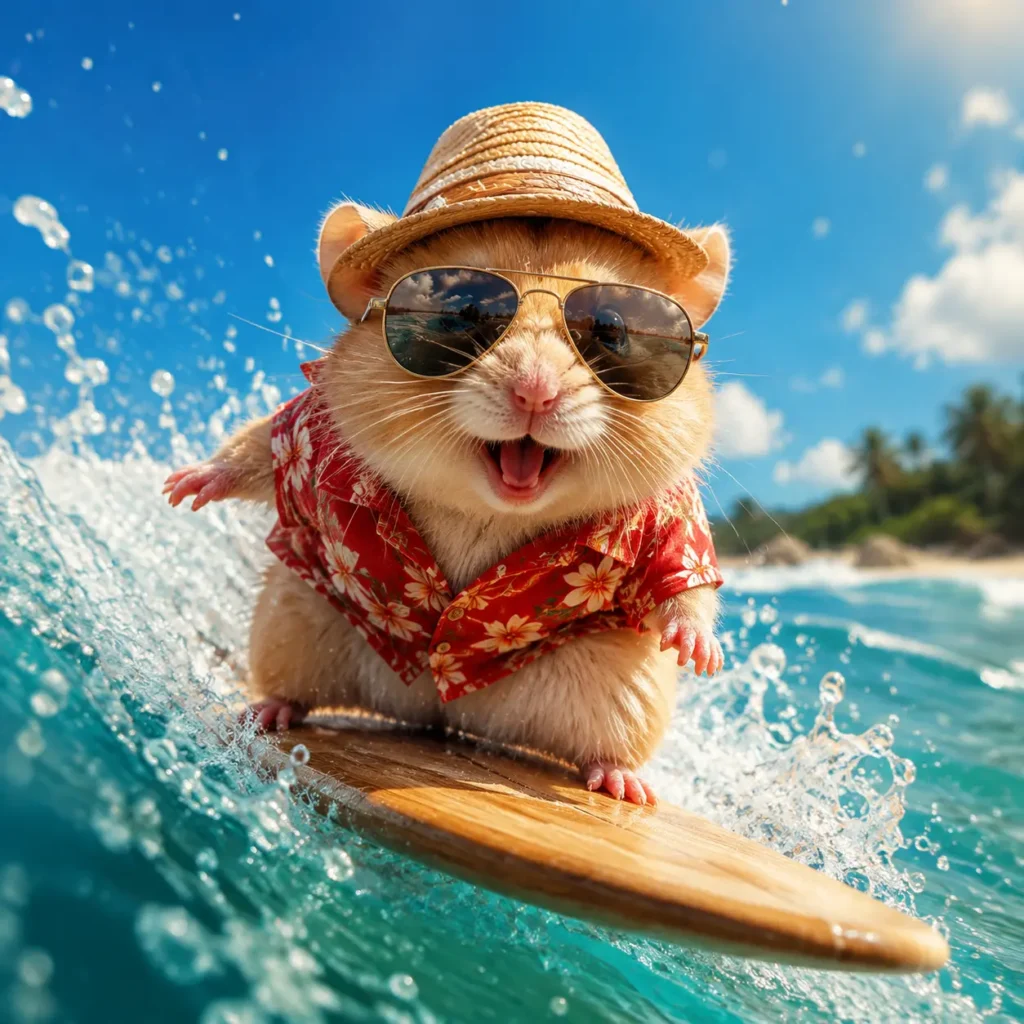
High-fashion luxury sunglasses campaign outdoors under a vivid blue summer sky with soft white clouds. A stylish young fashion model and a chic short-haired cat pose together in a bold low-angle editorial composition, both looking confident and wearing matching orange sunglasses as the hero product. The model wears an orange statement shirt, layered jewelry, and crisp tailored shorts. The cat wears matching orange sunglasses and an orange bandana.

Premium fashion magazine ad aesthetic, strong subject presence, elegant attitude, aspirational summer lifestyle. Emphasize glossy orange frames, sharp lens reflections, rich material detail, and polished finish. Open grassy field, clean horizon, minimal distractions, strong negative space. Coordinated monochromatic orange palette, bold but tasteful, modern luxury, Vogue-style summer editorial, photorealistic, ultra-detailed, cinematic sunlight, sculpted shadows, high contrast, subtle depth of field, high-end retouching.

No watermark, no clutter, no distorted anatomy, no extra accessories, no cartoon feel.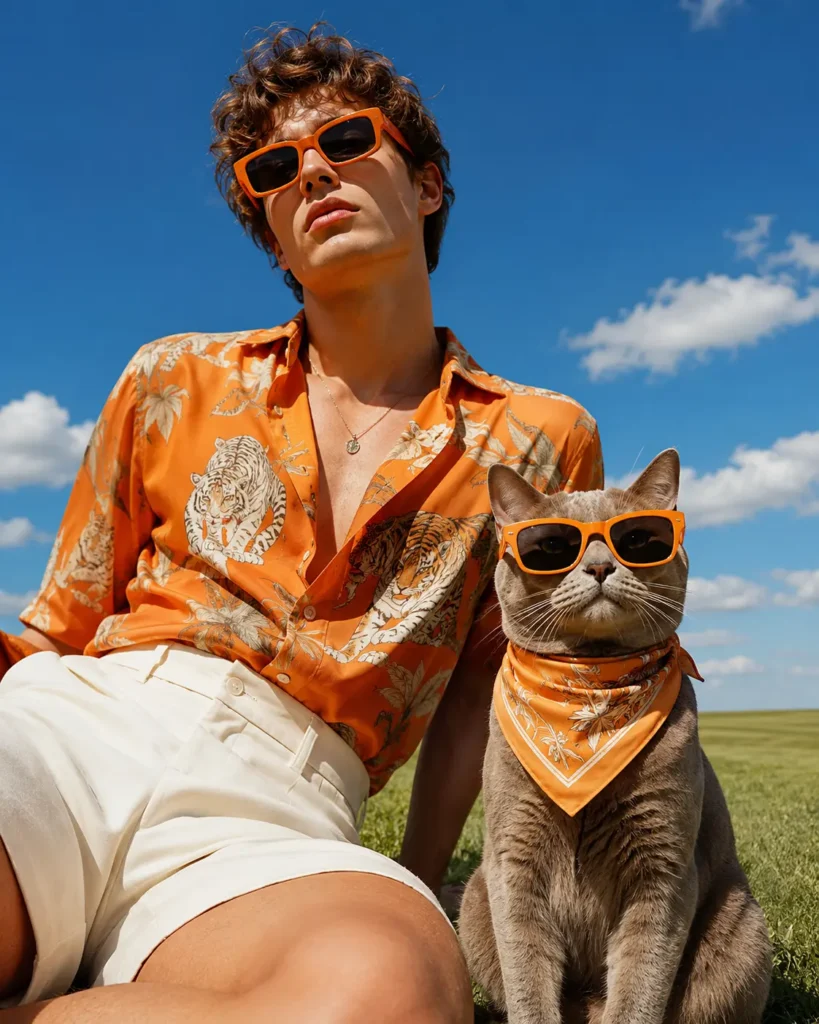
Type 3 — Cinematic Concept Ads
This category focuses on visual impact and brand memorability.
Characteristics
- dramatic visuals
- surreal compositions
- cinematic mood
- storytelling-first approach
Best For
- viral campaigns
- brand awareness
- launch campaigns
- luxury branding
Ultra-fashion editorial portrait, low-angle perspective looking up at a confident female model reaching toward the camera. Model has flowing red hair, wearing a tailored beige blazer, gold watch, and gold rings on fingers. Close-up dynamic composition emphasizing the hand and accessories in the foreground. Background shows towering reflective skyscrapers under bright sunlight. Cinematic natural lighting, high contrast, shallow depth of field, photorealistic, professional fashion photography style, 3:4 aspect ratio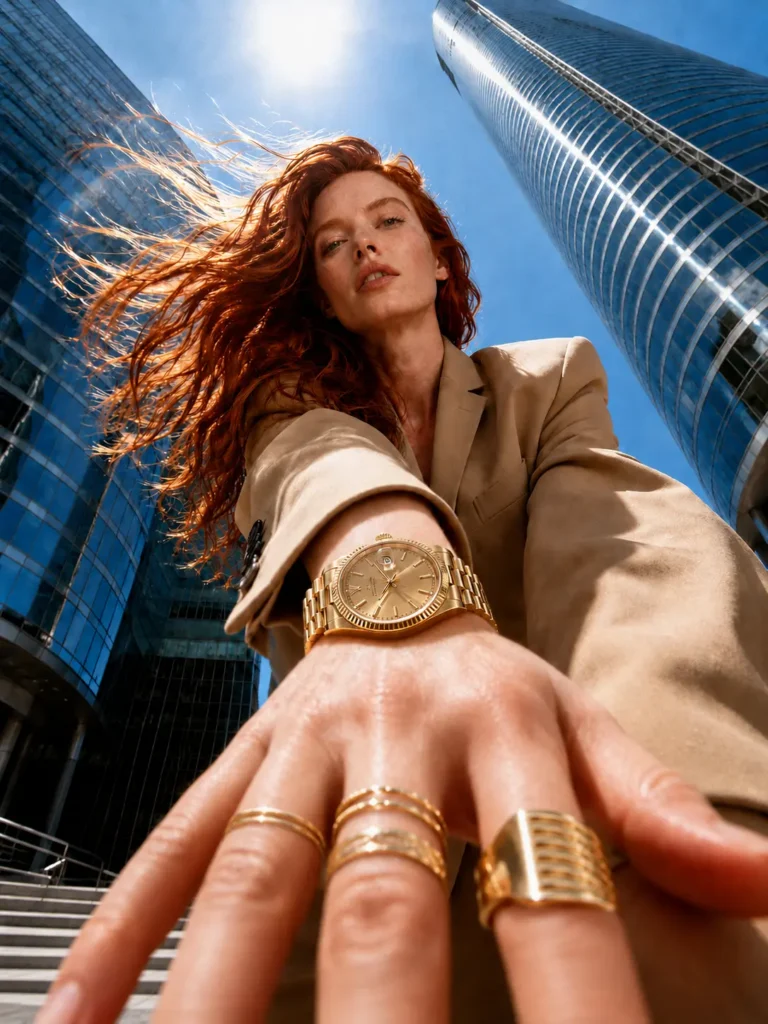
Full-body shot of a man in the style of high-fashion editorial photography, wearing an elegant white designer outfit and stylish sunglasses. The man is leaning on a giant luxury wristwatch, which is several times larger than him, dominating the scene. The watch is highly detailed, showing metallic textures, polished leather straps, and intricate dials. The model's figure provides a striking contrast to the oversized timepiece. Background: smooth gradient in warm tones, softly lit to enhance the cinematic and editorial fashion aesthetic. Composition: clean, centered, minimal distractions. Ultra-detailed textures, high resolution, photorealistic lighting, 8K quality, 9:16 aspect ratio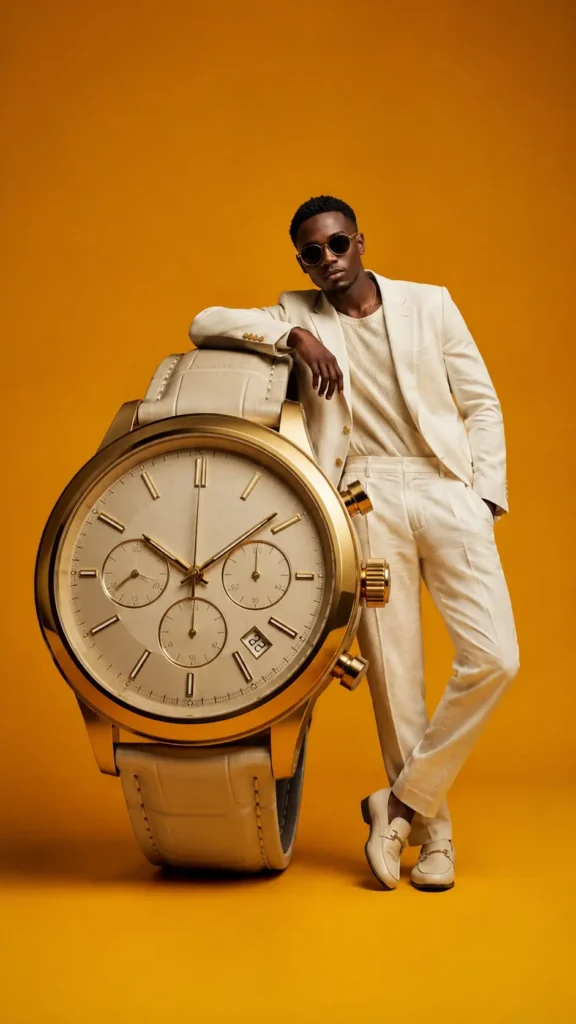
Create a high-end luxury watch advertisement with strong 3D depth and premium editorial styling. A stylish elegant woman emerges partially from a large vertical smartphone frame on the left side, creating a surreal 3D interaction effect. She wears a cream tailored blazer, sleek black cat-eye sunglasses, and has a refined, confident expression. Her arm reaches outward toward a luxury Richard Mille wristwatch displayed prominently on the right side.

The watch should be the hero product: a sophisticated Richard Mille timepiece with a champagne gold or rose gold case, refined dial details, premium leather strap, and ultra-realistic metallic reflections. The watch appears large, slightly floating or standing upright, with clear 3D dimensionality and luxury product rendering quality.

Scene composition should feel balanced, clean, and modern: smartphone on the left, model emerging from the phone, watch on the right, with elegant visual interaction between the model and the product. Background is a warm beige or soft cream gradient, minimal and refined, suitable for a premium fashion and luxury watch campaign.

Add a tasteful luxury slogan in elegant serif typography, such as:"Time, Perfected."and a smaller supporting line: "Precision crafted for every moment." Style: 3D commercial poster, luxury advertising, ultra-realistic product rendering, high-end fashion editorial, cinematic soft lighting, clean shadows, realistic materials, subtle reflections, premium minimalism, sophisticated composition, hyper-detailed, polished surfaces, depth-rich scene, elegant warm tones, modern luxury branding aesthetic, 8k quality.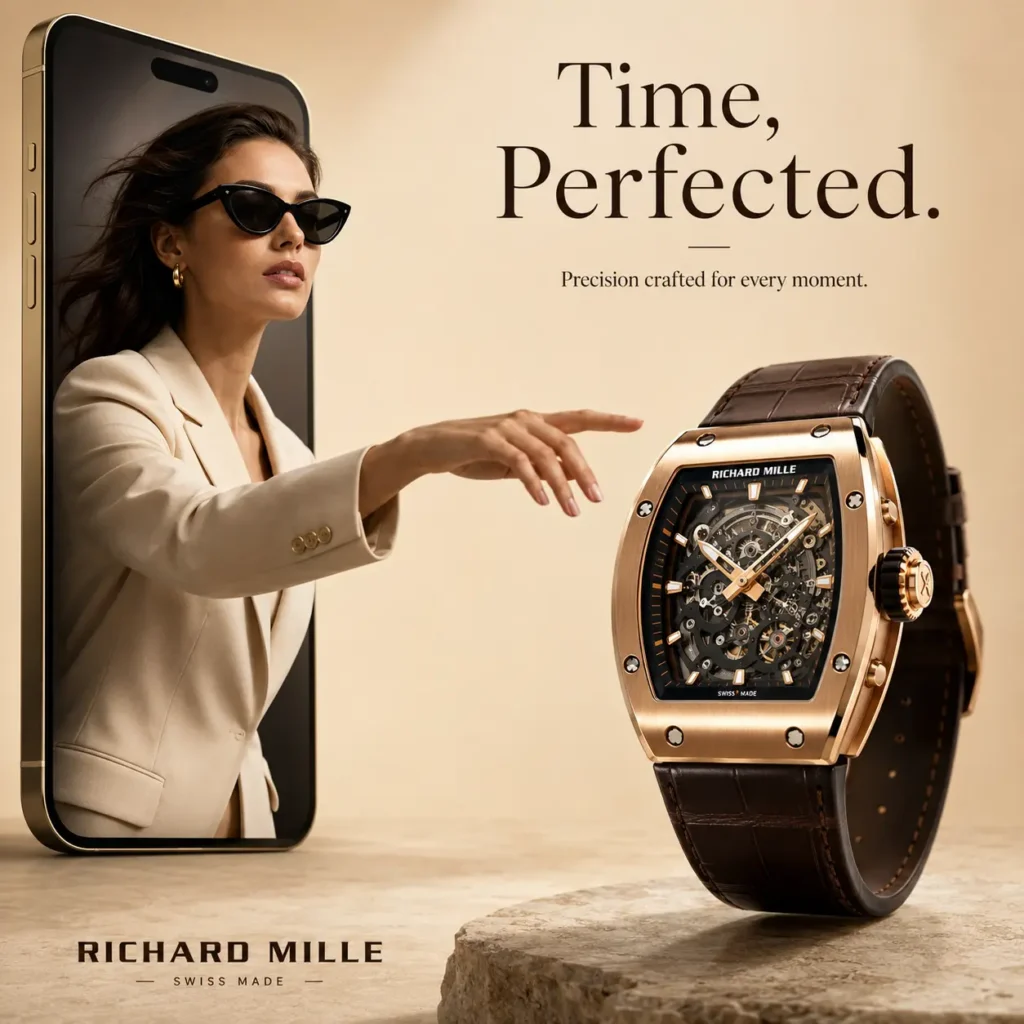
How We Structure This Inside Linocut.ai
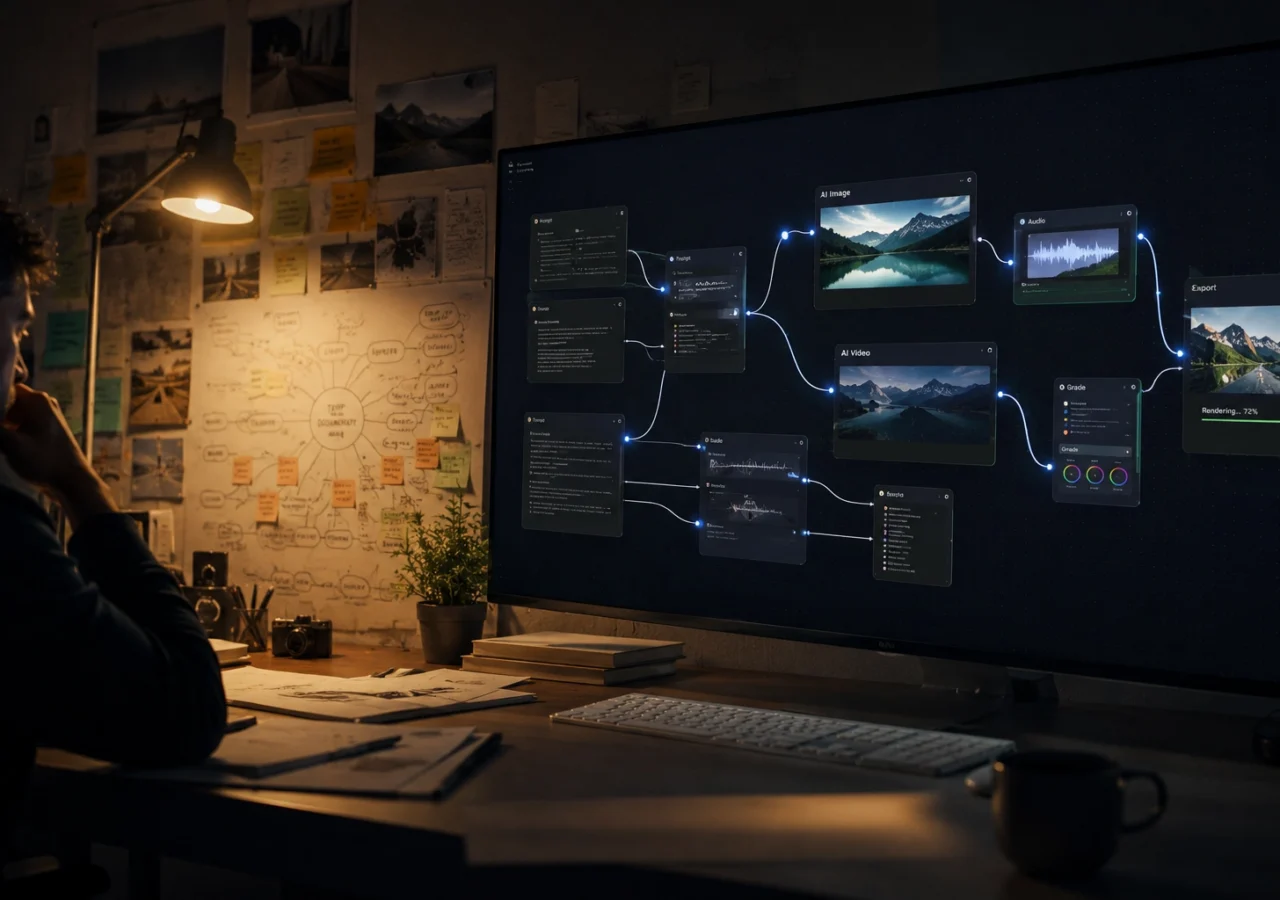
Inside Linocut.ai, prompts become reusable workflow nodes.
Instead of repeatedly copying prompts manually, creators can visually structure campaign pipelines like this:
Product Node → Concept Node → Style Node → Lighting Node → Image Generation → Variations → Export
This workflow approach helps maintain:
- visual consistency
- creative scalability
- faster iteration cycles
- campaign organization
Instead of scattered tools and disconnected outputs, the entire creative process stays inside a single canvas.
That workflow-centric approach is one of the core ideas behind why we built Linocut.ai in the first place.
Final Thoughts
AI-generated advertising is evolving quickly. But the future is not about generating random images faster.
It’s about building structured creative systems that can scale across campaigns, formats, and platforms.
The teams that win with AI advertising won’t necessarily have the best prompts. They’ll have the best workflows.
At Linocut.ai, we’re continuing to explore how workflow-based creative systems can help creators, marketers, and brands move from isolated AI outputs to connected advertising pipelines.
And honestly, we think we’re still only at the beginning of what’s possible.